Friday, 15 September 2023

How to Cater to the Dietary Needs of a Senior Dog

How to Cater to the Dietary Needs of a Senior Dog

Much like any other biological organism, dogs grow older and experience the inevitable process of ageing. Age brings with it a certain poise, grace, and wisdom, as well as an inevitable change in diet and lifestyle. Catering to the lifestyle requirements of a senior or elderly dog may seem like a daunting task; however, with a little preparation and a few visits to your vet, you should have no problems keeping your old friend comfortable.

What is an ‘Older’ Dog?

While there is no fixed age at which a dog starts to be considered a ‘senior’ or ‘older’, an educated guess can be made based on the dog’s health, weight, and size. Larger dog breeds usually have shorter lifespans, so they are generally considered to be seniors at 6 years of age. Smaller breeds tend to have slightly longer lifespans, meaning they are considered seniors at around 9 years of age.

There are other factors besides size as well. A dog’s weight and general health are also to be considered, as ageing may not be visible until symptoms like a decline in vision show up. The weight of your dog matters because obese dogs age more quickly; there’s a reason maintaining a balanced diet and exercise regime is important after all.

Older Dogs Require Less Food 

For elderly dogs, the type of food does not require a change, but the quantity or serving size does. Senior dogs will not have a metabolism like puppies, meaning they burn fewer calories throughout the day and require fewer calories to function as a result. Your elderly dog needs to be at a healthy weight since the combination of slower metabolism, lower energy levels, and higher calorie intake is the one which leads to senior dogs being overweight or obese. Therefore, you must adjust their meals accordingly to ensure that their daily portion size isn't too much for them.

If you're unsure about how to do so, you can visit your vet to plan out a diet chart. Your vet will consider different factors and help you plan a diet for your dog based on its age, weight, and health. Remember, the goal is to make sure that meal portions are adequate, not to starve your dog. Too few calories will also be harmful, and the goal is to maintain a healthy balance of proper nutrition in proper amounts. Frequent exercise (within reason) will also help improve your dog's health along with a new diet.

Make Sure to Include Plenty of Protein 

Maintaining muscle strength is essential as your dog ages. Since an elderly dog may not be able to process protein as well as it used to, it will require plenty of protein in its meals. Meat and fish are high-quality sources of protein which your pooch will be able to digest easily. However, too much protein will be detrimental, putting unnecessary strain on their kidneys, which can be a problem if your dog already has kidney problems. Therefore, you should consult your vet before making any changes to your dog’s diet and the sources of protein in it.

Older Dogs May be Picky Eaters

While it is normal for an older dog to eat less than a younger dog, they should still have a healthy appetite and a desire to eat. It is well-known that dogs are often passionate about food, and a sudden disappearance of their appetite can be a cause for concern. Cancer, kidney disease, dental problems, and diabetes, can all affect your dog's appetite, meaning you should visit your vet immediately if your dog’s appetite has suddenly vanished or if they refuse to eat.

If your dog is not seriously ill and simply finds their food unappealing, there are a few steps you can take: 

  • Older dogs are likely to be picky eaters, so try giving them things they enjoy eating. Just make sure you don’t overfeed them while doing so. 
  • Mixed feeding can help make food more palatable. If you’re using dry food, you can try mixing some water or pet-safe broth with it to make it more appealing and easier to eat. 
  • If your dog struggles with large meals, try breaking them down into multiple smaller meals throughout the day. 
  • Older dogs are prone to joint stiffness and pain. If your dog cannot bend comfortably to eat from their bowl, they will likely skip their meal, so try to keep their dish or bowl on an elevated surface. You can consult your vet for joint pain relief medication if this issue is chronic. 

To conclude, while it may seem like a daunting task to plan your elder dog’s diet, the general rules are fairly simple. Older dogs don’t require as many calories as younger dogs and a high-quality source of protein in their meals. Mainly, their diet will have to factor in for any medication they are on, and the serving sizes will need to be adjusted. Each dog is different, especially each senior dog, which means you should consult your vet and discuss your dog’s diet before making any changes.

Thursday, 24 August 2023

How to Maintain Your Pets Physical & Mental Health

How to Maintain Your Pets Physical & Mental Health

Mind and body go hand in hand. Or paw in paw, in the case of our pets. We know that pets are our cherished companions, loving us unconditionally. We also know that pets are a part of the modern family unit, as much a member of the family as any of their owners. However, while they are bundles of joy, our pets are also complex beings with mental and physical needs of their own. Since they cannot verbalize their needs, it is up to us as owners to look out for our pets and help maintain their mental and physical health. Here are a few ways you can do this .

Proper Food

Anyone who spends any amount of time in the gym will testify to the importance of a proper diet with high-quality foods. The same goes for your pet – to maintain your pet's physical health, it is important to provide them with a balanced diet comprised of high-quality ingredients. The key term to note here is 'balanced diet' since overfeeding will lead to obesity and only pose further problems. High-quality foods will contain proteins, fats, fibre, calcium, and carbohydrates in the right amounts to encourage a healthy growth rate, while low-quality foods will use fillers instead of quality ingredients. A planned diet will benefit your pet's respiratory, skeletal, cardiovascular, and digestive systems, while unplanned free feeding will be detrimental to them. If you’re unsure about how to draw up a new diet plan, consult your vet for a few tips on the same.

Recognize Distress 

To conclude, provided you feed your pet good quality foods, follow a balanced diet, stimulate them physically & mentally, and socialize them at the right time, you should have no issues maintaining your pet’s health. Do remember to visit your vet regularly, as they can help you spot problems in advance, but other than that, you should be good to go.

Provide Emotional and Mental Stimulation 

A pet will be truly healthy when it is in a good state, both physically and mentally. While we pay attention to a pet’s physical needs, we often forget the mental enrichment. Keeping your pet engaged mentally will prevent boredom, restlessness, and the eventually destructive behaviour a pet may exhibit in the absence of such stimulation. Play dates, puzzle toys, and enrichment toys can all help, especially when supplemented by your daily walks outdoors. Remember, when a pet is bored, that energy will manifest itself as destructive behaviour like chewing, whining, or biting, so try to help them release their energy at such a time instead of scolding them. Affection is a far more powerful motivator than anger, so make sure you show your pet you adore them. shower them with hugs, kisses, cuddles, brushings, and belly rubs (for dogs). Training your pet has numerous benefits, one of which is reduced stress and anxiety levels, which can be beneficial if you embark on pet travel frequently.

Routine & Regular Exercise 

Mind and body go hand in hand, so your pet’s enriched mind requires an equally capable body to truly flourish. Hiking, walking, running, and swimming are all brilliant ways to exercise your dog, while cats will benefit from cat toys that stimulate them indoors like puzzles. Alternatively, you could set up an obstacle course, teach your pet tricks, or hide treats instead of handing them out to make things more interesting for your pet. A quick ten-to-fifteen-minute game of fetch can work wonders for your pet’s physical and mental health. Since different species and breeds of pets require different levels of daily exercise, consult your vet before making any changes in routine.

Socialization 

Much like a human child, the early years of a pet play a crucial role in their socialization and their understanding of what’s right & wrong.  Pets should be socialized from a young age around humans and other animals to prevent any behavioural issues down the road. You can do so by visiting family with your pet or organizing playdates. Most behavioural issues pose a problem for your pet’s health and well-being, and since they stem from a lack of socialization, you should do so while they're young. Exploring the world is a great way to socialize your pet, so if your pet is old enough, you could consider pet travel to do so. Doing so will require you to crate train your pet, which will teach them to be relaxed in your absence and when travelling.

Vet Visits

As pet parents, our pets are the world to us. However, while nobody could ever love them more than us, some are better equipped to identify, diagnose, and treat potential issues our pets may have. You and I know these people as veterinarians. A vet specializes in pet healthcare and can spot issues that even the most loving pet parents would miss due to a lack of medical experience. Not just for times of crisis, a vet can help you with diet plans, routine check-ups, and further health exams to ensure your pet is fit and fine all the time.

To conclude, provided you feed your pet good quality foods, follow a balanced diet, stimulate them physically & mentally, and socialize them at the right time, you should have no issues maintaining your pet’s health. Do remember tovisit your vet regularly, as they can help you spot problems in advance, but other than that, you should be good to go.


Tuesday, 8 August 2023

Basic Vaccinations a Pet Needs Before International Travel

Basic Vaccinations a Pet Needs Before International Travel

Arranging for the relevant documentation and paperwork is one of the most labor-intensive aspects of international pet travel. While you may not require much in the way of paperwork when travelling with your pet domestically, each country has its own set of laws and restrictions which you must comply with to complete an international relocation successfully. Since nobody wants to transport or grant entry to a sick or ill animal internationally, travelers are required to carry proof of vaccination, which is also known as a pet passport or vaccination record. To help ease your journey, we’ve compiled a list of basic vaccinations every pet should have before an international journey.

Pet Vaccinations Required for International Travel

While different countries impose different rules regarding pet travel, there are a few basics which will remain consistent. For example, a rabies vaccination is a basic requirement which will be mandatory regardless of your destination. The vaccination must be at least 30 days old but no more than a year old as a rule of thumb; While you may have gotten your pet rabies shot may be valid for 3 years, some countries enforce this rule to minimize the risks associated with such a move.

A rabies vaccine will be a basic requirement for dogs, cats, and other household pets. However, depending on your destination. Your cat/dog may require additional immunizations to comply with import laws. It is recommended you check these requirements and laws and get your pet vaccinated in a timely manner. Here are a few extra vaccinations which can be included in the import requirements. Even if they aren’t needed, a bit of extra protection against infectious diseases is hardly something to object to.

For Dogs:

  • Rabies
  • DHPP (Distemper, Hepatitis, Parainfluenza, Parvovirus)
  • Bordetella (Kennel Cough)
  • Leptospirosis
  • CIV (Canine Influenza Virus) 

For Cats:

  • FVRCP (Feline Viral Rhinotracheitis, Calicivirus, Panleukopenia)
  • FeLV (Feline Leukemia Virus) 

Additional Requirements for International Pet Travel

Different countries have different laws regarding vaccination, but regardless of the rules, it is wise to be prepared before embarking on a long-distance pet relocation. Alongside the basic and mandatory vaccines, here are a few pet travel essentials you will need on your journey, be it for safety or convenience reasons.

  1. Chip - A pet microchip is permanent proof of ID and is a mandatory requirement when travelling overseas. Both the airline and your destination country will list a pet microchip as a mandatory import requirement, and it is an excellent safety device which helps identify your pet if they get lost, wander off, or is mixed up with a similar-looking pet. Pet microchips are standardized across the world; just make sure you have an ISO 11784/11785 chip and you’re good to go.

  2. Rabies Titer Test  - Some countries require more than proof of vaccination against rabies. Depending on whether you're travelling from a country which is classified as a "high rabies" country, you may need to produce the results of a rabies titer test. This test checks for the level of antibodies in a given blood sample through titration and ensures your pet is adequately immune to rabies before travelling. You may/may not require this test depending on your country of origin & destination.

  3. Import Permit & Documentation - Along with a pet passport, you will require an import permit and an export permit before flying with your pet overseas. Depending on your destination country, you may be required to get such a certificate endorsed by the appropriate (or approved) veterinarian. Along with this, you will require a health certificate/fit-to-fly certificate. Such a certificate is completed by a vet after a checkup, to ensure your pet is healthy and fit to fly before an airplane journey.  

  4. Parasite treatment - While not prescribed by all countries, some countries require you to treat your pet against internal and external parasites before an international move. This is done to prevent the introduction of parasitic infections into a country. Such treatment is supposed to be administered to a pet shortly before travel (roughly 24-72 hours before departure), so make sure to check if your destination country requires this treatment as an import requirement. 


Wednesday, 26 July 2023

Choosing the Right Mode of Pet Transport

Dog_sitting_in_car_boot


While tough to count exactly, it is estimated that there are over a billion pets in houses around the world. Given how pets are central to the modern family unit, it is no surprise to see a large number of people moving about and travelling with their pets. There are also different methods or modes of travelling with a pet since each family has different needs and requirements for transportation. Choosing between modes can be difficult and often depends on your travel requirements.

Here are the different pet travel options available to pet parents:

Air Travel

Air travel is the most preferred means of pet travel, especially over longer distances. You’ll need to either make a booking and fulfil the requirements mandated by airlines or hire a pet relocation service to do it on your behalf. As mentioned, pet transportation by air is preferred for its quick travel times across a country or continent. The longer the travel time, the longer a pet must stay inside its crate, so a shorter journey is beneficial to a pet and ensures its well-being in transit.

The downsides of air travel are the cost and the preparation process; you cannot travel unless you comply with the regulations of the airlines. These regulations range from check-in and booking instructions to breed and size limitations for animals who are allowed to travel on board. Some airlines will only allow pets to travel in-cabin, while others will only permit pet travel through cargo. Make sure to check the rules of the airline you’re flying on and fulfil them to have a smooth journey.

Land Travel

Land travel is used for shorter and more local journeys, or for travelling on routes that would be otherwise inaccessible by air travel. Land travel is also significantly less expensive compared to air travel, which is an important factor if your destination is close enough to not warrant a flight. Once again, you can either transport your pet yourself or charter a pet relocation service to do it for you.

Land travel can be done via two modes: by road and by rail. Road travel will offer you more flexibility concerning when and where to stop, the number of hours of continuous travel, and so on. However, it will also require a lot of effort on your part as you'll be the one driving and planning for stops. Rail travel can be done through remote corridors of a country where airlines cannot operate, but like with the airlines, you must comply with any booking formalities and travel rules they have in place. 

Both of these modes are extremely useful, especially when you consider the nature of your journey. Moving to a neighbouring city? Road travel should suffice. Travelling across the country with a large pet or an elderly one? Train travel should give you the time and space to relax comfortably on your lengthy journey. Remember, your pet’s health and comfort matter, and your choice should be made keeping them in mind.

     Pet Transport Providers

If you're planning your move to a new city, state, or country, and are overwhelmed by the process and planning required, you can hire a professional or “private” relocation service to ease your burden. Such a service provider will plan the entire excursion for you, from the initial planning to the documentation and subsequent pick-up of your pet and will also account for your every need along the way.

Think of it as the opposite of an airline; a relocation service provider will accommodate every request you may have regarding your pet’s care and transportation and will make sure you’re updated on your pet’s progress regularly. Such a service does cost a little more than traditional transportation methods, but the trade-off is that you have peace of mind while planning your travels.

To conclude, while there are different methods of pet travel available, you should choose the method which best suits your journey. If you’re travelling over shorter distances, then road travel will be more suitable than air travel while costing significantly less. If you’re travelling cross-country, you could use an economical train trip for a comfortable trip. When going to international destinations, you’ll seldom have any options other than air travel. Whatever mode you choose, make sure it is the one most suitable for your journey and the one which will keep your pet safe, comfortable, and happy on your journeys. 


Friday, 14 July 2023

How to Make Pet Travel Eco-Friendly

How to Make Pet Travel Eco-Friendly

It is no secret that climate change is an issue for humanity with various extreme meteorological conditions observable worldwide; from bone-dry draughts to torrential rains, weather patterns have been far from predictable. Humanity is aware of this issue, with steps being taken to reduce emissions of CO2 and other greenhouse gases.

Awareness is a wonderful thing; however, it does not change the fact that the act of travelling in general is not exactly the most eco-friendly. Regardless of the mode, by road, rail, or air, each mode of transportation causes an impact on the environment, the most common ones being pollution & carbon emissions.

Therefore, as the world grows smaller and smaller, and as global pet travel is set to increase in frequency, it is only right that we consider the impact our travels have on the environment, and how could we go about reducing our carbon footprint for more eco-friendly pet travel.

Here Are A Few Ways You Can Make Your Pet Travel More Eco-Friendly.

  • Switch to Compostable Poop Bags - All pet owners are encouraged to clean up after their pets outdoors to ensure a clean and hygienic public space for all. However, since pet excrement is collected and tossed in plastic bags which end up in landfills, this is hardly an environmentally friendly solution. Switch to compostable disposable bags so your pet's waste can be disposed of safely and productively. Make sure to read up on the bags and what they're made of, as anything that isn't plant-based will likely not decompose and will act as a pollutant.

  • Fly Directly & Avoid Layovers - While it may be an obvious piece of advice, flying on direct flight routes instead of opting for any connecting routes helps reduce emissions. It is inevitable at some point you’ll need to board a flight to reach your destination, but you can do your part by choosing to fly a direct route instead of one with stops and layovers. An aircraft produces the highest level of emissions during takeoff and landing, so cutting out that connecting flight does make a difference. For pet travel, especially international pet travel, most airlines will not permit pets on ultra-long-haul flights or ones with multiple layovers as it adversely affects their health. So, flying direct routes is the best choice for your pet and the environment.

  • Choose an Eco-Friendly Hotel - Hotels are no strangers to waste; as a result, choosing eco-friendly living quarters for your stay can make a difference when travelling. An eco-friendly establishment will have implemented practices like recycling and offering local cuisines rather than curating an expensive and imported menu.

  • Carry Reusable Water Containers - Hydration is an essential requirement for all living beings. Relying on plastic bottles from roadside stops is hardly the most practical solution or the most cost-efficient one, so carrying your own reusable water bottle will help you steer clear of the excess plastic. If you’re flying with your pet, food and water bowls can be attached to their crate for on-the-go hydration. If you’re travelling by road or train, make sure to carry an extra bottle and your pet’s water bowl for refreshments.

  • Use Public Transportation - If you have the opportunity, use public transport whenever possible. Vehicles are one of the biggest sources of greenhouse gas emissions, and alternative methods of travel like public transport or carpooling offer a greener alternative for travel. Remember to check whether the public transport of any area you’re already in or visiting allows pets on board. Most cities that are renowned for being tourist attractions or pet-friendly will have provisions for pet travel on public transport, which will make your journey both greener and easier.

  •  Swap Plastics for Fabrics - Nearly everyone knows how harmful plastics are to the environment. Besides poop bags for your pet, swap plastic or paper bags with a more long-lasting cloth or jute alternatives. There's nothing greener than carrying your carry bags and there's the bonus of not having to look for or buy wasteful plastic/paper bags around your destination.

To conclude, travelling of any form is fundamentally harmful to the environment, but that doesn’t mean we can’t take steps towards making it less so. Remember to minimize flying and only fly direct routes when you must. Sharing public transport and reusing containers/bags helps reduce the amount of waste generated on your travels. If everyone does their little part in waste reduction and promotes efficiency, pet travel can become as green as grass.


Thursday, 22 June 2023

Tips to Protect Your Pet Against Illness


Image of Dog with Blanket


Biology is hardly unbreakable. Regardless of what type of pet you have, at the end of the day, a pet is a biological organism and is susceptible to sickness. Since sicknesses can hamper your pet’s daily life and cause a host of issues for both you and them, it is necessary to protect them against potential sickness and disease.

Here Are A Few Tips on How to Protect Your Pet Against Potential Illness:

Stay up to date on Vaccinations

Vaccinations are a reliable and efficient way of protecting your pet from potential illnesses. Provided you get your pet booster doses at the right times to maintain protection, vaccinations are an easy way to safeguard their health in the long term. A rabies vaccination is commonly cited as one of the necessary basic vaccinations for pets, but there are a few more immunizations you can provide your pet to prevent disease and serious illnesses. Such vaccinations are also mandatory if you ever plan on an international pet relocation

Vaccinations can help prevent the following diseases in pets: 

  • Distemper 
  • Bordetella 
  • Leptospirosis 
  • Lyme Disease
  • Parvovirus 
  • Rabies 

Depending on where you live, some vaccines will be mandatory due to government regulations, while others won’t be state mandated. If you’re confused or unsure about the protection to give your pet, visit your vet so they may clear up your doubts. Your vet can draw out a vaccination routine chart, complete with booster doses and vaccination effectiveness to help you gauge the current level of protection your pet has and how long it will be in place. As a general rule, aside from rabies, you should get your pet the basic group of vaccinations when you visit your vet with them for the first time. 

1.   Practice Preventive Treatment

There are plenty of ways your pet can pick up a disease, and the more exposed your pet is to the elements, the more likely it is to pick up an affliction. Invasive parasites can also cause illnesses, as they pass along pathogens when they feed on a pet’s blood. Fleas and ticks are the most commonly found parasites in household pets, and are responsible for spreading diseases like Bartonella, Lyme Disease, and Anaplasmosis. 

 Due to this, internal and external parasite treatment is prescribed for pets to prevent such parasites from making home in your pet’s body. Worry not though; there are anti flea collars, anti-tick/flea shampoos, and medications available to curb the spread of blood-sucking parasites. As always, consult your vet before selecting any course of action or product.

1.   Brush Your Pet Down When Returning Indoors

If you have a pet that spends time outdoors, whether for walks or refreshment, you should give them a basic brush when they return indoors. Pets that spend time outdoors have a far greater chance of picking up ticks or fleas, so brushing them immediately is a good idea and helps prevent a potential infection. If you observe more than a tick or two, schedule a vet visit for a thorough cleaning. 

1.     You may have heard this point twice or thrice already, but that doesn’t make it any less crucial. Pets can sometimes show signs of illness that a pet parent can’t pick up on since they aren’t an animal specialist. Frequent vet visits are necessary for this reason, as a vet can judge your pet’s health across different visits to establish a baseline, against which your pet’s health is compared to check whether it is heathy or requires treatment. Your vet will conduct physical exams, blood tests, and waste tests to gauge your pet’s health. Any issues that they find can then be diagnosed and treated in a timely fashion, making sure your pet remains healthy in the long run. 

Ensure Pets and Wildlife Remain Separated

If you have an outdoor pet or one that must be taken outdoors frequently, steer clear of any wildlife in or around your area. Wild animals like stray dogs, cats, rabbits, racoons, and monkeys carry pathogens and parasites which can spread to your pet if they are scratched or bitten. Make sure to keep your pet on a leash or harness when walking outdoors and avoid wild animals. If you do run into a wild animal or have a scrap with one, visit your vet immediately and make sure your pet’s vaccinations are up to date. Call the local animal control authority to see if you’re having an issue with wild animals in your locality. during pet travel by road, avoid spaces with lots of wildlife. 

1.   Diet

While a healthy diet may seem like a massive change with loads to plan for, the reality is you’ll have smooth sailing once you plan the diet itself. Remember to visit your vet with your pet, and once you have a portion size you can measure out for each meal, stick to it. Make sure your pet only eats healthy and drinks clean water and steer them clear of any foreign food or water
sources like puddles or trashcans.

1.  Cleanliness is Key 

Your pet isn’t the only one who needs to stay clean. Diseases can pass from animals to humans as well as humans to animals, meaning you should keep yourself clean to avoid introducing any diseases into your household. Make sure to wash your hands when returning indoors, as well as after interacting with any animal.

No pet parent wishes for an illness to befall their furry baby. The good news is that it is relatively easy to avoid any serious illnesses with a few preventive measures. Provided you keep your pet clean, avoid items of unknown origin on walks, schedule annual vet visits, and feed them a healthy diet, you should have no trouble making sure your pet stays healthy and happy.


Monday, 19 June 2023

A Guide to Long-Distance Pet Relocations

A Guide to Long-Distance Pet Relocations

Human beings are creatures of habit and repetition. Any event that disrupts this repetitive schedule often turns into a stressor, especially an event like moving to a new house, state, or country. Pets are like their owners in this respect, wherein a sudden disruption of routine is likely to stress them out. The good news is that with proper planning and a little bit of patience, you and your pet are sure to have a smooth journey.

Preparing Your Pet for a Long-Distance Journey

Unless you’ve done so already, the first step is to acclimate your pet to travel and travel over shorter distances before you can embark on long-distance pet travel. Since your pet can only fly or travel in an IATA-accredited pet crate, you should first train them within the house before gradually moving outdoors.

Once your pet is happy and comfortable inside their crate, you can slowly start taking short trips in the car so they can get used to the experience of travelling inside their crate. This process is not an overnight one, so provide your pet with this training ahead of your planned travel time.

Aside from crate training, there's the matter of the crate itself. You'll need to choose an appropriate crate based on the size of your pet; such a crate should allow your pet to sit, stand, turn around, and lie down comfortably. Depending on the mode of transportation you're taking to reach your destination, you may need to plan. 

Things to Pack for a Long-Distance Trip

The essentials of long-distance pet travel differ from mode to mode, as do the preparations. Food, treats, toys, a leash & harness, and a first aid kit are all important requirements if your move is more local than international. A blanket or soft toy or item of clothing that’s familiar to your pet can be used to line the inside of their crate, to calm them down and give their temporary crate a more homely feel to it. 

Remember, the mode of transport should also be selected after considering the needs of your pet. A pet that is too young, i.e., under 3 months of age, will not be able to fly, so you'll need to arrange for alternative means of transport if you've just welcomed a new baby pet. Similarly, if your pet is elderly, it will require extra care during transit for a comfortable journey. Plan your pet's travel once you've considered such factors, so your pet has the best possible journey.

Land vs Air Travel 

Different modes will require preparation. For instance, while rest and refreshment stops are managed by the airline when flying with your pet, you’ll need to plan them yourself when travelling by road, along with things like extra food bowls, dry food, road laws, and so on. Planning smoothens a journey immensely, so plan according to the mode of transport you end up choosing. 

If you’re travelling by road, you will need to account for bathroom breaks and time spent walking your pet outside their crate. If your pet is prone to getting motion sick, these breaks will need to be more frequent. Hydration is equally important, especially if you’re travelling through a hot or humid region since most household pets cannot sweat like people do. Make sure never to leave your pet alone or locked in a car, especially on a hot day. The temperature inside a car can soar to the point of being fatal, so it is best to keep your pet within arm's reach.
 
Air travel is a little different when travelling with a pet. For one, your pet’s admission is at the airline’s discretion. Some airlines will let your pets fly with you, some will only allow pets to travel in the cargo hold, and others refuse to fly pets under any circumstances, so make sure to conduct your research before making any bookings. Air travel is far more secure and safer than its alternatives, but that also means it involves more documentation; vaccination records, health certificates, and more may be required. Make sure to keep your pet’s documentation handy, as it is more than likely you’ll end up needing it.

Schedule a Vet Check-Up Before Travel 

Any travel with your pet is exponentially more dangerous if your pet is sick or injured. As such, when planning to travel with your pet over longer distances, you should always visit your vet. your vet can help you with specifics of travel like a health certificate and vaccination record and can also make sure your pet is fit to travel safely.

Remember to clear any travel or medical doubts while you're there since your vet is a pet health expert and can advise you on aspects of the journey like feeding when on the go. As a safety note, it is crucial to remember that you cannot sedate your pet before travel unless expressly recommended by your vet in writing. At altitude, sedation can prove fatal as it affects regular bodily functions like breathing, heart rate, and body temperature.  

To Conclude 

While there are various methods and modes you can use for pet travel over long distances, it is important to select the one safest for your pet. When in transit, the best thing you can do is be aware, vigilant, think ahead, and prioritize the comfort & safety of your pet. Proper planning prevents poor performance, so plan to ensure an enjoyable journey for all.

Looking for pet transportation?  Need experts you can trust while travelling? Carry My Pet offers pet flight services for your comfort and convenience. Call 08908909020 or reach out to us at enquiry@carrymypet.com to make a booking today.


Monday, 29 May 2023

How to Ease Your Pet Grooming Experience

How to Ease Your Pet Grooming Experience

Regardless of the pet you have, it is likely they will require grooming at some point. For more traditional pets like cats and dogs, you have options when it comes to how you go about grooming your pet. If you’re handy with the combs and clippers, chances are you can manage your pet’s groom yourself. However, some pets have multiple coats or difficult-to-manage fur, which can require professional attention. Your pet must behave well during the groom, to make the process easier on themselves and their groomer.

Why Should I Groom My Pet?

You may be wondering, why is grooming so important? Much like you bathe and groom yourself, your pet requires similar care to remain fresh, clean, and healthy. Grooming is not merely for aesthetics since it helps with your pet’s health as well as their general appearance. Here are a few reasons why grooming is important for your pet.

  • Grooming helps remove matting. This is especially important if you have a pet with a long coat, as once their fur matts there is little choice but to shave the spot. Frequent grooming will prevent matting and the subsequent bald spots caused by it after it is removed. 
  • Grooming helps remove loose fur. This is especially helpful for pets with thick winter coats or heavy undercoats and keeps your pet comfortable. It is also a necessary process if your pet is a heavy shedder.-
  •  Grooming removes unwanted pests and parasites. Frequent brushing and grooming will help you clean out fleas, flea eggs, ticks, and other undesirable pests from your pet's fur. These pests can cause diseases if left unchecked, so a groom reduces your pet's chances of catching a tick/flea-related disease.
  • Grooming helps curb potential infections. Pets with longer hair or fur can have problems with their eyes, paws, or their backside. Since longer hair means more room for unwelcome parasites, it is better to frequently groom these areas. Any dog owner who has a long-haired breed will vouch for the fact that walks and poop time is easier when their pet’s rear isn’t full of long hair.

Commonly Observed Issues During a Groom 

So, if grooming has so many benefits, why don't all pet parents visit a groomer regularly? There are various factors, but the most cited one is that the pet lashes out or is fearful of the grooming process. A groomer comes across pets of all kinds while on the job, and while some pets are extremely friendly and docile, others may be nervous/anxious/angry at the prospect of a groom which could potentially become an issue.

Here are a few commonly observed problems during a groom: 

  • Making Noise: Pets who are nervous or anxious can display that feeling in the form of noise. Barking, howling, or whining are all noises that can disrupt the groom and disturb any other animals who are there for a session.
  • Anger: Pets may show their discomfort with the situation by displaying anger. Lashing out, biting, scratching, and other unsociable behaviour may be observed if a pet is distressed.
  • Squirming: Thrashing, struggling, trembling, or running away are also behaviours a distressed pet shows at the groomers. While more common than an outright aggressive pet, such behaviours can also complicate a groom and make it a longer process than it is. 

Tips to Ensure a Smooth Groom

Any of these behaviours can disrupt the groom and potentially cause problems for the groomer, since other animals in the vicinity may become agitated when in a relatively closed space with a loud stimulus. Groomers themselves reserve the right to refuse to groom an aggressive or challenging pet. Such behavioural issues are also not limited to a groom and can become a potential issue if not addressed. Fortunately, with the right preparation and a little training, your pet should be as comfortable with the groomers as they are at home. Here are a few steps you can take.

  1.           Make Sure Your Pet is Happy Before the Groom - It’s a simple fact that a happy pet is more likely to behave than one who is uncomfortable or anxious. If your pet is in discomfort, hungry, thirsty, or tired before a groom, chances are these feelings will display themselves while they are being tended to by an unfamiliar person.
  2.          Acclimate Your Pet to Social Situations - Most sights and smells considered normal by us in day-to-day life are unusual to our pets. if a pet is not used to equipment like a nail cutter, a fan, or a pair of clippers and combs, consider socializing them further so they may become comfortable in such scenarios. Groom your pet yourself as a start, clip their nails and comb their fur so they get a feel for the grooming equipment. If your pet is touchy about you clipping their nails, chances are the groomer won’t have a much better time.
  3.          Meet the Groomer Before a Groom - Different groomers operate and specialize in different equipment and animals. When you’ve settled on a groomer, visit them, and discuss your pet. Be open and honest about your pet’s general behaviour, temperament, and any potential problems that may arise. An open dialogue will help the groomer prepare for your pet, especially if you’ve chosen a good groomer who understands a pet parent's concerns. You can also familiarize the groomer with your dog’s training commands for an easier experience.
  4.        Sit in on a Grooming Session - If your pet is known to be anxious around strangers, your presence during the groom should soothe them and help prevent any undesirable behaviour. Doing so will also have the added benefit of you being able to spot any stressors, which you can then work on later. Most groomers should allow you to sit in on a groom, after which you can consult your vet or a pet specialist depending on the outcome. 

To conclude, a pet being difficult to groom is a common occurrence. The good thing is that with a little patience and just a little trust, your pet will soon be as comfortable with their groom as they are at home. Grooming is an important part of pet care if you frequently embark on pet travel, as an ungroomed pet is more likely to carry ticks and parasites, none of which a country will permit entry to. Make sure to choose a reputable or recommended groomer and train your pet beforehand to have the best possible pet grooming experience. 


-   

Monday, 8 May 2023

Common Dog Illnesses & How to Spot Them

Common Dog Illnesses & How to Spot Them

No living organism is immune to diseases. Our pets are no different, and while most people assume that dogs have inherently strong immune systems, they are still susceptible to certain illnesses. Most commonly occurring conditions are not particularly serious. However, if left untreated, these conditions can become a cause for concern and pose a threat to your dog’s health and well-being.

As expert pet relocators, we understand how important your pet’s health is, even more so when embarking on pet travel. Illness means your pet cannot safely travel, especially if it is suffering from a communicable condition, and since an international pet relocation involves numerous health checks, it is necessary for your pet to be healthy if you intend on travelling together.

Common Dog Illnesses & Ailments

Dental Disease

Dogs require dental care just like people. Oral and dental issues are amongst the most prominent and common issues faced by dogs, which can increase in severity with time. Plaque, tartar, and gingivitis are the early signs of dental disease in dogs, with more severe symptoms of periodontal (gums & bone) disease like abscesses developing if no treatment is administered.

The primary symptom of dental disease is frequent bad breath, even after cleaning or brushing. Other symptoms include loss of appetite, drooling, red or bleeding gums, discolouration of teeth/gums, and loose teeth. Treatments for such conditions are administered by a vet, with cleaning, tooth extraction, or root canals prescribed depending on the disease. Frequent brushing and regular vet visits are the best and easiest ways of preventing dental diseases. Invest in a dog toothbrush and dental wipes to help you maintain your dog’s dental health, which can then be supplemented by a bi-annual vet visit for complete care.

Ear Infections

Ear infections can have a few causes. Repetitive ear infections are typically caused by allergens, especially ones present in your dog’s food like wheat or soy. Common indicators that your dog is suffering from an ear infection are scratching, pawing, or rubbing their ears on different surfaces. More advanced symptoms of an ear infection include pain, loss of balance, loss of hair around the ear, and a reddened ear canal.

Treatment of an ear infection can be done at home, provided you have it diagnosed by your vet and have the appropriate medication for it. Remember to clean and dry the infected ear and consult your vet before administering any medication, be it an anti-fungal or an antibiotic.

Itchy skin/Skin Infections 

A dog scratching themselves is a common sight, so you’ll be forgiven for not picking up on a skin infection instantly.  However, if you notice your dog scratching continuously and restlessly, the chances are the culprit is a skin infection. Such a condition has numerous causes; an allergen in your pet's diet, bacterial infections or a yeast infection are all probable causes of a skin infection, and you should visit your vet if the incessant itching hasn’t ceased after a diet change.

After diagnosing the nature of your dog’s skin condition, your vet can prescribe a shampoo or ointment that is suitable for your pet’s skin condition and fur type. Do not try to diagnose and medicate your dog’s condition by yourself, as even your good intentions can have negative results.

Vomiting and/or Diarrhea 

Upset digestive systems can happen. Dogs spend a lot of time around their owners and inevitably have a nibble of something they cannot digest, which manifests itself as an upset stomach for a day or two. However, if more chronic or persistent vomiting and diarrhoea follow, you should visit your vet immediately as these may be symptoms of a more serious underlying condition.

There are various potential causes for your dog's upset digestive system. Although your dog may have eaten something they should not have, it can be caused by an illness, intestinal worms, or parasites. Head to your vet immediately for a proper diagnosis if your dog's condition does not improve after an initial bout of vomiting/diarrhoea.

Urinary Tract Infections

UTIs are marked by symptoms like frequent peeing, indoor peeing (despite training), crying or yelping while peeing, or blood in the urine. Head to your vet immediately if you notice any of these symptoms, as the vet can diagnose the severity of the issue and the required treatment for it. If an infection is found, an antibiotic course will likely follow.

Stiffness and Pain

Stiffness and joint pain accompanied by difficulty in moving about are things dogs experience at roughly six years of age, depending on their breed and size. If you notice your dog is more lethargic, struggles to get up from a resting position, is slow to climb a flight of stairs, or appears less mobile than before, then it may have stiff joints and the pain that comes with it. Keep your dog’s bones and joints healthy with frequent exercise and keep their weight in check to alleviate stiffness. Some larger dog breeds are known to suffer from joint issues; consult your vet if you own such a breed for a more long-term solution.

Timely Intervention is Key

As you may have noticed, most of these diseases and ailments are easier to prevent than to cure, since you can prevent them by daily maintenance but only a professional can truly cure a serious condition. It is why it is important to know the symptoms of these common illnesses, as recognizing them and acting quickly can prevent any further issues. If you are ever in doubt about your pet’s health, make sure to contact your vet immediately, and maintain vigilance when your dog falls sick to differentiate between a general condition and a serious one. 

Tuesday, 18 April 2023

Laws Surrounding Pets in Apartment Complexes

Laws Surrounding Pets in Apartment Complexes

If you’re a pet lover or owner, chances are you’re familiar with the challenging task that is raising a pet in a housing/apartment complex. Every such complex has its own set of rules for pet ownership, which are in place to ensure the harmony of the community and residents are expected to adhere to these rules. To make sure that pets are not discriminated against, the A
nimal Welfare Board of India has passed a set of laws for their safeguarding. Pet owners need to be familiar with these laws, as it is necessary to do so to avoid any discrepancies in your apartment complex.

Pet Laws Governing Pets in Apartments

  1. Banning Pets is Illegal - According to Section 9(k) Prevention of Cruelty to Animals Act, 1960, it is illegal for housing complexes to pass pet bye-laws that disallow pets. Not even a vote over the same validates the process, and no congregation can pass any laws that go against the provisions outlined in Section 9(k). Each being has a right to life according to the constitution, and each citizen must be compassionate towards them.
     
  2. Discrimination is Prohibited - An apartment complex cannot discriminate against pets based on their size, age, or breed. They also cannot use distressed behaviors like excessive barking or whining to argue for a pet ban. 

  3. Cruelty Against Animals is Punishable - An apartment complex cannot pass any rules or laws that harass pets. Cruelty towards animals, both pets and strays, is a punishable offence under Section 428 and Section 429 of the Indian Penal Code.

  4. Feeding Cannot be Prohibited - An apartment complex and its dwellers cannot ban one or more residents from feeding stray animals in the complex.
     
  5.  Use of Common Areas - An apartment complex cannot bar a pet from entering common areas such as lifts, parks, and lobbies, and cannot impose a fine for the same.

Responsibilities of a Pet Owner

While it is true that the general approach of an apartment complex towards pets is important, the pet owner also has a certain duty. As an owner, you should be aware of the rules and laws governing your pet, and of the responsibilities you have when you’re with your pet in a community.

Here are a few things to keep in mind when living in an apartment complex with a pet.

  1. Training is Necessary - If you don’t train your pet, they won’t know how to behave indoors or outdoors. Training your pet during their younger years, teaching vital obedience commands and toilet training can save you a lifetime of inconvenience. An untrained animal in an apartment complex may be overwhelmed due to the sheer number of things happening at the same time, so train your pet to make them comfortable in all social situations. 

  2. Familiarization Brings Comfort - An apartment complex will have many strange faces and smells, and your pet will need to safely interact with such elements in a common area. Familiarize your pet with their surroundings and neighbours so they don’t lash out. 

  3.  Vaccinations are Essential - Vaccinations provide safe, effective, cost-efficient, and long-term protection against communicable diseases. Vaccinating your pet is essential, as you live in a community, and nobody should be exposed to harmful diseases due to owner negligence.

     Here are a Few Basic Vaccinations for Dogs and Cats:

    - For Dogs: Canine Parvovirus, Canine Distemper, Hepatitis, Rabies, Leptospirosis (Core).
    - For Cats: Panleukopenia, Rhinotracheitis, Calicivirus, Rabies, Feline Leukaemia.

    If you’ve adopted a pet and are unsure about their vaccination history, consider re-vaccinating them or get a Rabies Titer Test done to check for prior protection. 

  4. Adhering to Norms - If you’re a long-time pet owner, you should inquire about the rules and regulations an apartment complex adheres to before moving in. The current rules will give you some idea about how pet-friendly a space is, and whether it has dedicated spaces or times for pets to roam around outdoors. Make sure to stick to the laws and be polite if you accidentally break one. Most disputes over space can be solved amicably if one keeps a cool head.

  5. Cleaning Up After Yourself - Maintaining the cleanliness of general areas is important in a community, and one of the first issues raised by residents in a society is the mess created by pet excrement. You should clean up after your pet when taking them outdoors to relieve themselves and correctly dispose of the waste.

  6. Being an Accountable Pet Parent - Regardless of how well-trained your pet is or how good they behave off a leash, you should always keep your pet on a leash when outside your home. Common areas often have children and the elderly relaxing in them, and an over-enthusiastic pet can be cause for concern in such a space, especially since they aren’t aware of their strength. Socialize your pet from a young age so they are comfortable around other people and animals and can function in a space like a society without being overwhelmed. Make sure your pet gets plenty of exercise, and make sure your pet is well-fed in your absence if you're working during the day.

The rules and regulations of living space are in place for a reason. Peaceful co-existence is possible, provided a little empathy is displayed from both sides. As a resident, try to be patient with someone who is still training their pet to behave better, and as an owner, try to teach your dog the appropriate way of behaving in a shared space. Provided you keep your pet on a leash, clean up after them, and train them, everything should be smooth sailing.

Looking for pet transportation?  Need experts you can trust while travelling? Carry My Pet offers pet flight services for your comfort and convenience. Call 08908909020 or reach out to us at inquiry@carrymypet.com to make a booking today.

Friday, 14 April 2023

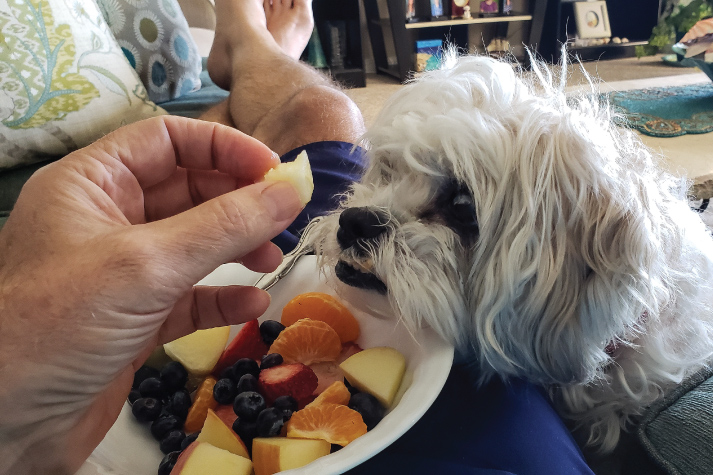
Fruits for Dogs: What to Serve & Avoid

Fruits for Dogs: What to Serve & Avoid

Fruits are universally acclaimed, no matter the country or culture. And for good reason; fruits are chock full of vitamins and minerals, with the benefit of being as delicious as they are healthy. Including a selection of fruits in a diet helps avoid deficiencies, strengthens the immune system, and aids digestion. They also serve as brilliant alternatives to the typically fried and nutritionally deficient snacks.

Can my Dog Eat Fruits?

The benefits of fruits aren't just limited to humans either, since nature's goodness can be enjoyed by our four-legged friends as well. However, dogs cannot eat everything we can, and every dog owner is well aware of the list of human foods that can be detrimental to a dog's health. Dogs have different dietary requirements to humans, and since they like to sample everything while not knowing what is/isn't harmful to them, the onus is on us to make sure they only eat foods which are safe for them. 

You may be wondering then, is it even healthy for my dog to eat fruits? The answer is yes, provided you feed them the correct fruits. Dogs are omnivores, and a balanced diet for them includes a variety of fruits, vegetables, meat, and grains. So, yes, your dog can eat fruits. The next thought you may have is, how do I know what fruits are good for my dog? What fruits are going to boost their health, and which ones are detrimental to it? What precautions should you take before serving certain fruits, and which ones to avoid altogether?

What Fruits Can I Serve to My Dog? 

Fortunately, there are a host of fruits your dog can enjoy safely. Here are a few of them you can serve.

  1. Apples: Apples are great snacks, as they are an excellent source of Vitamin A and Vitamin C. Do remember to remove the core and seeds before, as those aren’t good for them like they aren’t for us.
  2. Oranges: These colourful fruits have Vitamin C and fibre in abundance, just remember to remove the flesh and seeds before you serve it.
  3. Cucumbers: These fruits are high in water content and serve as a good source of Vitamin C and Vitamin K. Bonus: it’s a fruit with a low sugar and calorie count, meaning it can be safely served as a snack.
  4. Peaches: They make for a juicy treat, provided you remove the pits before serving.
  5. Watermelon: This water-rich fruit is great for beating the heat and staying hydrated on a scorching summer day. As with all fruits, remove the seeds if any.
  6. Mangoes: Affectionately known as the king of fruits, mangoes are a great source of Vitamin A, Vitamin C, and Vitamin E, but also high in sugar. You can serve mangoes as a treat on special occasions.
  7. Bananas: Packed with potassium and vitamins, bananas are a great treat, provided you do so occasionally. Its high sugar content makes it a less-than-ideal daily treat. 

What Fruits Are Harmful to My Dog? 

There are plenty of fruits to choose from to supplement your dog's diet. That being said, there are also some fruits and vegetables which you should avoid at all costs, as they can cause serious harm to your dog if ingested. Since dogs like to eat first and think later when confronted with any sort of food (unless you’ve trained them not to), there are some things you should keep well out of your dog’s reach. Here are a few of them. 

  1. Grapes: Grapes, and by extension raisins, are toxic to dogs, to the point where even a small amount can prove fatal. Keep these well out of reach of your dog if they're a staple in your fruit basket, and pay attention to its dry-fruit cousin during the holiday season.
  2. Cherries: The cherry plant and its seeds contain cyanide, which is toxic to dogs. Avoid them and dispose of the seeds and stems if they are around your house.
  3. Tomatoes: The tomato fruit itself is not harmful to dogs. But, the green stem that's often left attached to it can upset a dog's stomach, so it’s probably best to avoid them altogether.
  4. Potatoes: Raw potatoes contain solanine, which can upset your dog’s stomach. Keep out of your dog’s reach.
  5. Avocados: The seed, leaves, and skin of the avocado fruit all contain the toxin persin, which can cause an upset stomach, diarrhoea, and vomiting. Keep these healthy breakfast staples well away from your dog. 

What if my Dog Eats Such a Fruit? 

If you think your dog has ingested something that can be harmful to them, there are a few symptoms you can look out for:

  • Vomiting
  • Diarrhoea
  • Dehydration
  • Twitching
  • Low energy levels
  • Fatigue
  • Constipation and change in normal posture
If you observe one or more of these symptoms immediately or shortly after you suspect your dog of ingesting something they shouldn’t have, get in touch with your vet ASAP. Timely action can make a huge difference and save your pet’s health in such a scenario. Keep these foods off the shelves or tables where your dog might reach them, and make sure you follow precautions when serving your dog fruits. While some fruits are good for your dog and bring health benefits, others are detrimental to their health, and it is upon you as an owner to make sure your dog is eating well and eating healthy.


A Vet’s Guide: 8 Things You Should Never Do to A Dog

Dogs are intelligent, compassionate, loyal, and loving companions. To us humans, dogs have rightfully earned the moniker of ‘man’s best frie...